Loading...
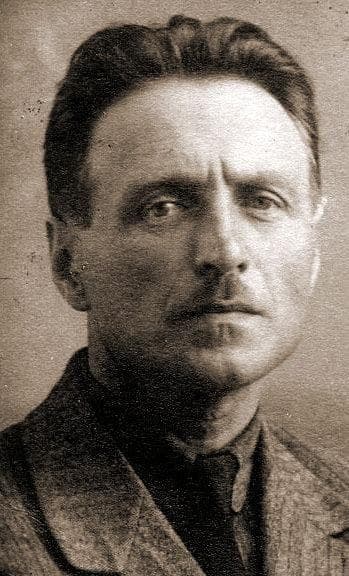
Mykhailo Boychuk
Михайло Бойчук
1882–1937 · Romanivka, Ternopil region
Founder of Boychukism, a monumental school synthesising Byzantine, Quattrocento and Ukrainian folk art; co-founder/rector of the Ukrainian State Academy of Arts. Executed by the NKVD on 13 July 1937; nearly all his monumental works were destroyed.
Art Movements
Monumentalism
Monumentalism is an architectural and artistic approach emphasizing grand scale, durability, and intense symbolism, designed to evoke awe and project authority or historical significance. It often features austere, symmetrical, and geometric forms crafted from permanent materials like stone or concrete, frequently used to promote political, state, or civic power. Key Characteristics Colossal Scale: Focuses on immense size to dominate the landscape. Permanence & Stability: Utilizes materials intended to last for centuries. Symbolic Power: Commonly used to glorify specific regimes, ideologies, or historical events. Simple Aesthetics: Often features geometric shapes, strong symmetry, and simplified, austere, and massive structures.
Explore movement →1910s–1930sBoychukism (Monumentalism)
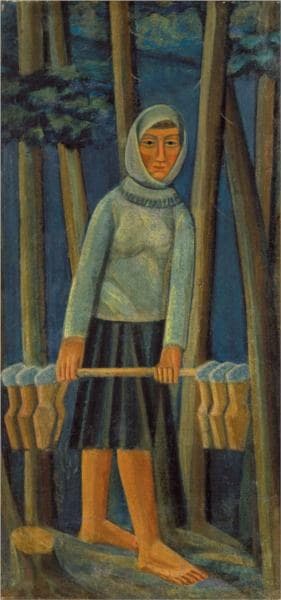
A Ukrainian monumental-art school founded by Mykhailo Boychuk fusing Byzantine icon tradition, Italian Quattrocento and Ukrainian folk art into a synthetic 'great style'. Annihilated by Stalinism — its leaders executed in 1937 and nearly all works destroyed.
Explore movement →1920s–1930sExecuted Renaissance
The generation of Ukrainian artists and writers of the 1920s–30s whose national cultural flowering was suppressed by Soviet terror, with many executed or driven to death during the Great Purge.
Explore movement →